

Buttermilk Biscuits from Scratch
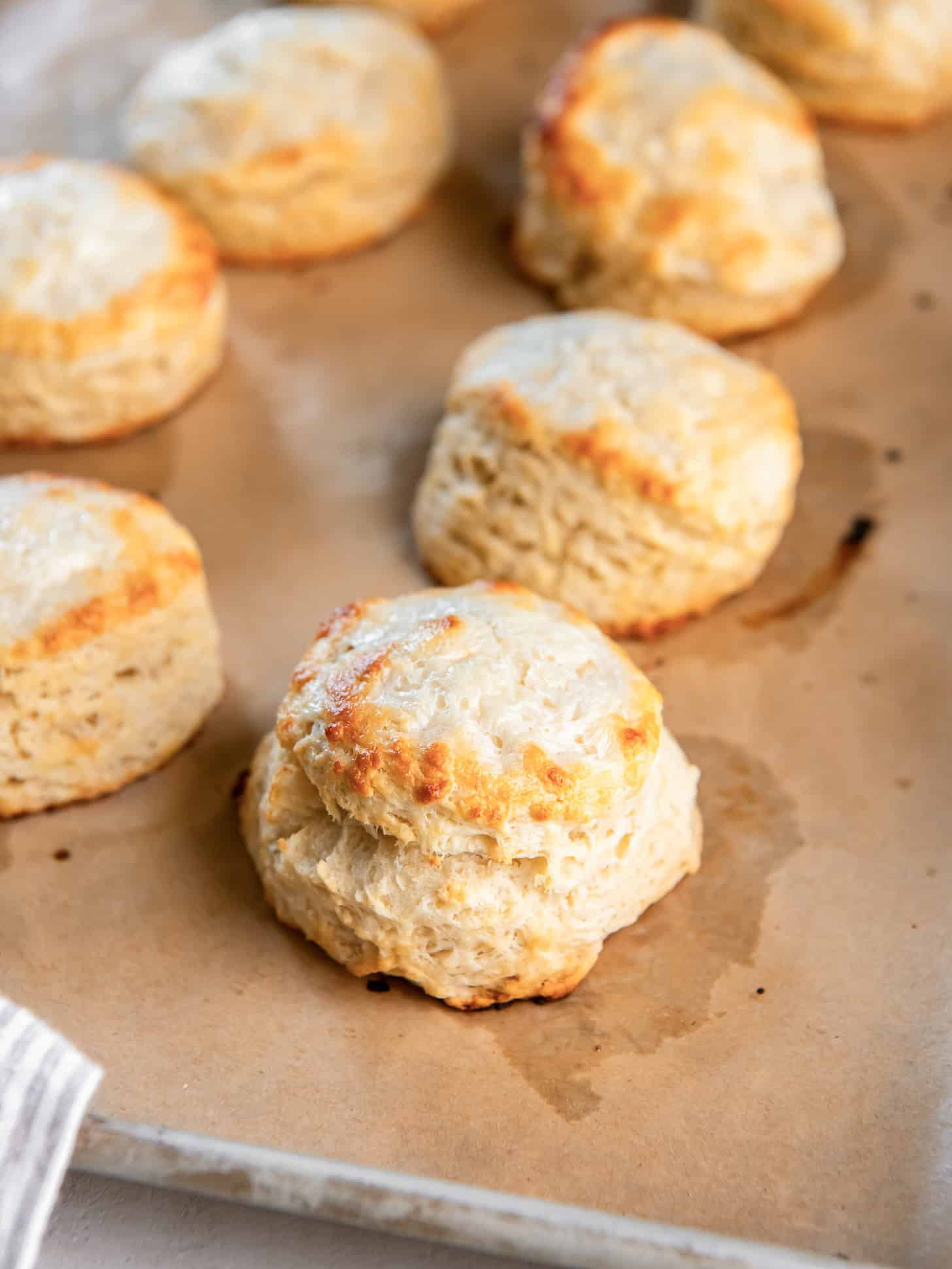
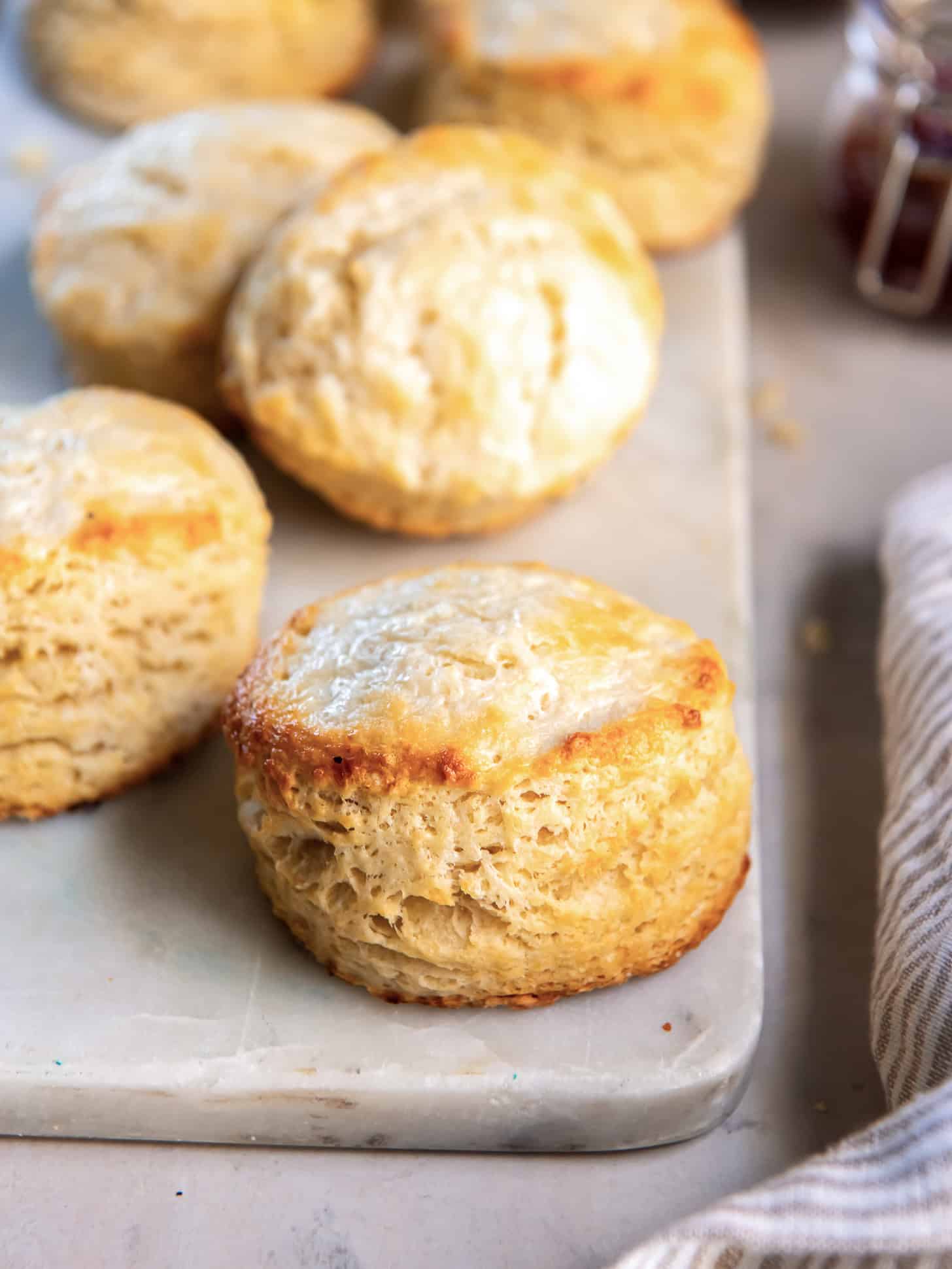
These homemade buttermilk biscuits are tall, fluffy, and full of buttery, flaky layers! With crisp golden tops and soft, tender centers, they’re just begging for a pat of butter and a drizzle of honey. Best of all, you only need 7 simple ingredients to make them from scratch!
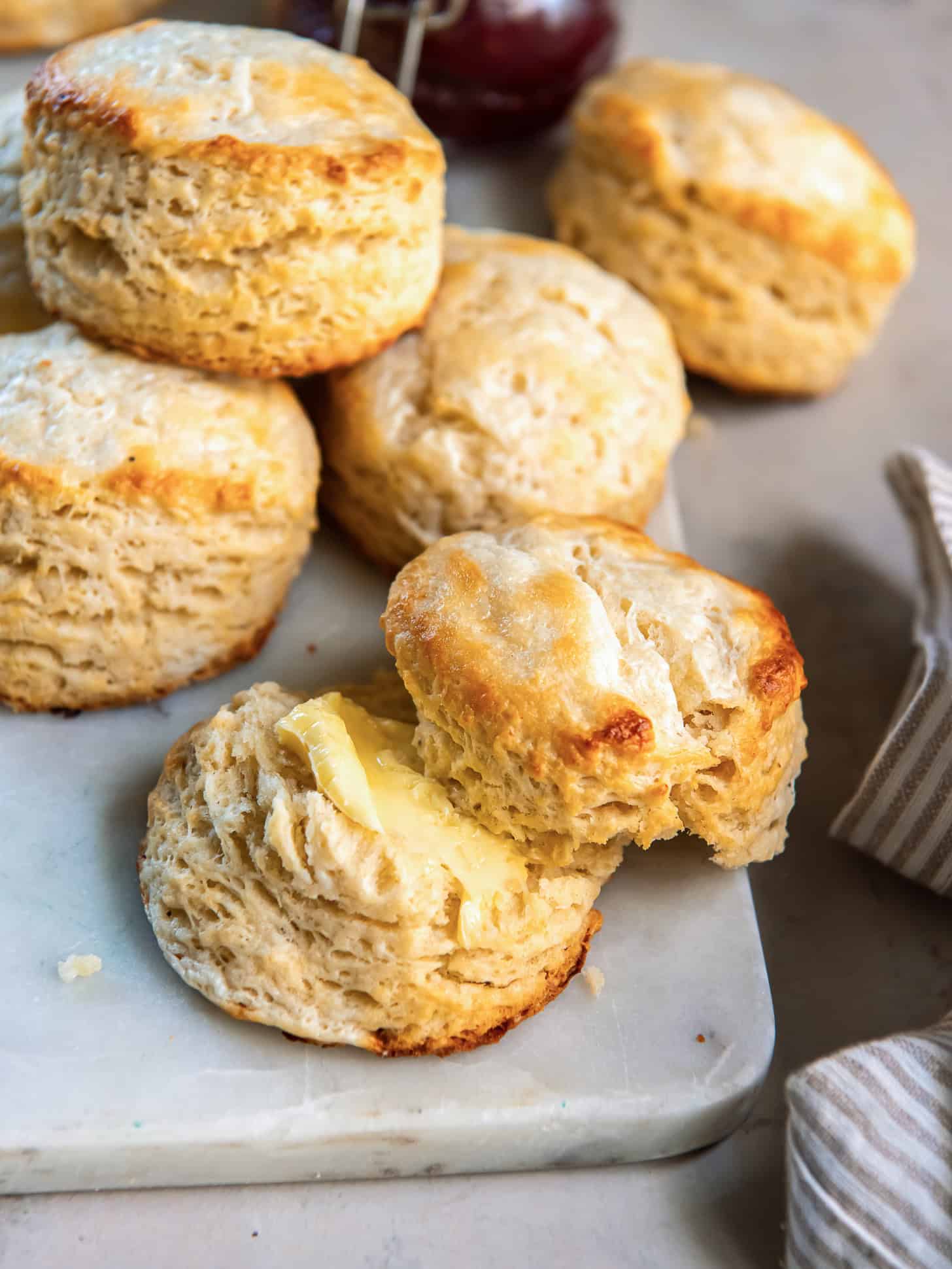
I’m convinced a basket of warm, homemade biscuits can make just about any meal better. Give me one fresh from the oven, split down the middle with butter melting into every little nook, and I’m happy! They’re a must with a big weekend breakfast, but I’ve been known to make them just because dinner needs something good to soak up all that gravy.
The trick to getting those flaky layers is keeping the butter and buttermilk cold and giving the dough a few gentle folds. It makes such a difference! I also love that you can make these by hand or use a food processor to save time. Once you see how easy they are, you might never go back to canned biscuits!
If you don’t have a pastry cutter or round biscuit cutter, try my buttermilk drop biscuits instead. They have just as much flavor and are simple to make! Another variation to try are my sweet potato biscuits.
Why You’ll Love This Recipe
- Bakery-worthy biscuits at home. Tall, golden biscuits with flaky layers and soft, fluffy centers. No baking skills required!
- Just 7 simple ingredients. Nothing fancy or hard to find, just a few pantry staples and cold butter for the best homemade biscuits!
- They go with just about anything. Pile them high with eggs and bacon, drizzle with honey, or turn them into the best breakfast sandwiches!
Ingredient Notes
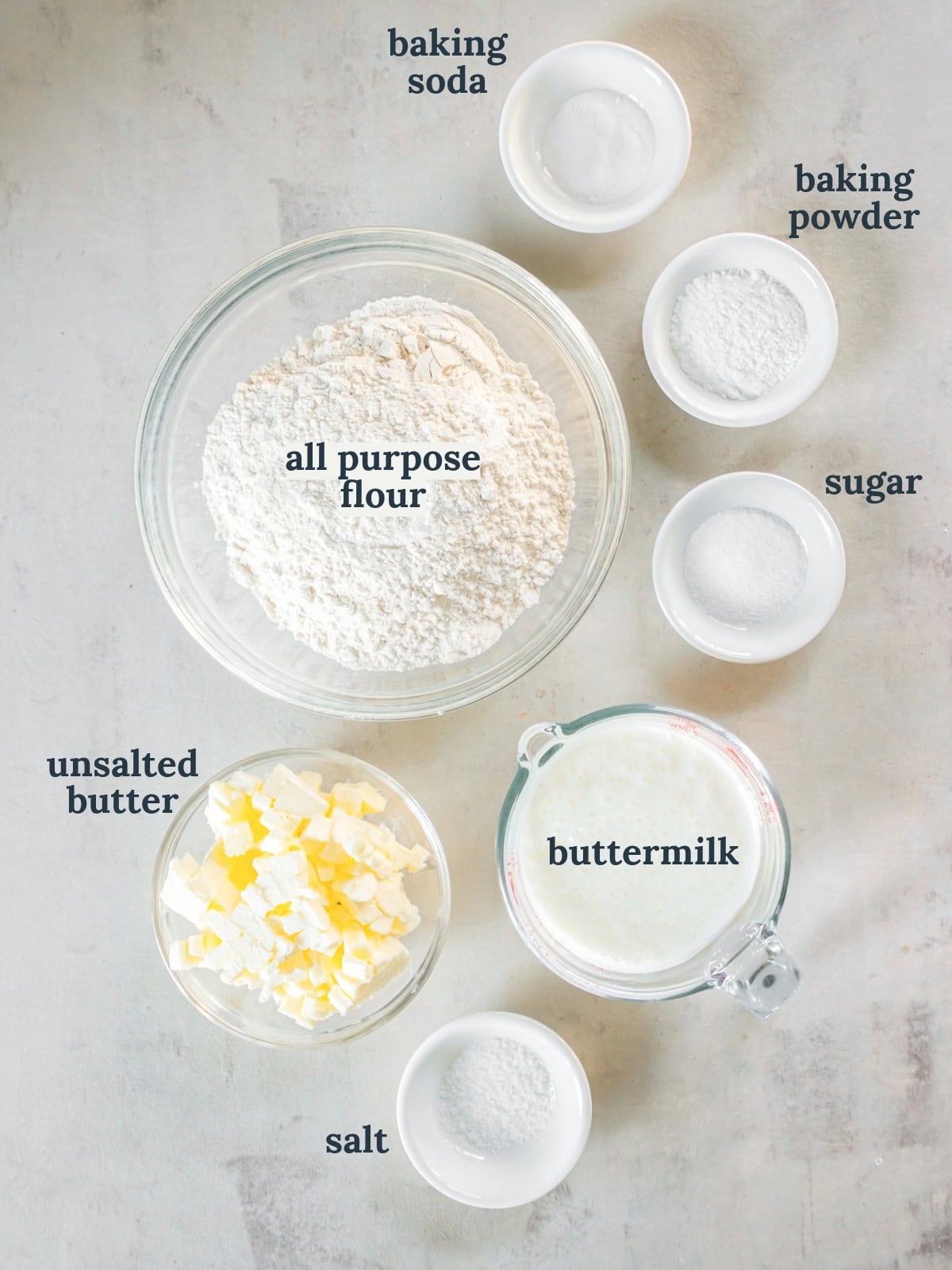
- All-purpose flour: Gives the biscuits structure while keeping them soft and tender. Be sure to measure it correctly!
- Baking powder: Helps the biscuits rise nice and tall.
- Baking soda: Works with the buttermilk to give the biscuits an extra lift.
- Sugar: Just a little balances the flavors without making the biscuits sweet.
- Salt: Brings out that rich, buttery flavor.
- Unsalted butter: Keep it cold! Those little pieces of butter create the flaky layers as the biscuits bake.
- Buttermilk: Adds a slight tang and keeps the biscuits soft and tender. Cold buttermilk works best! Leftover buttermilk? Try making savory cheddar biscuits, homemade cornbread or buttermilk waffles.
Refer to the recipe card for the full list of ingredients and measurements.
Recipe Variations
Cheddar biscuits. Fold in ¾ cup shredded sharp cheddar cheese for a cheesy twist. Add a pinch of garlic powder for even more flavor!
Herb biscuits. Mix in 1–2 tablespoons of fresh chopped rosemary, thyme, or chives for a savory biscuit that’s great with dinner.
Honey butter biscuits. Brush the warm biscuits with melted butter mixed with a little honey for a sweet finish.
Cinnamon sugar biscuits. Add ½ teaspoon cinnamon to the dry ingredients and sprinkle the tops with cinnamon sugar before baking. A fun treat for breakfast or brunch!
How to Make Buttermilk Biscuits
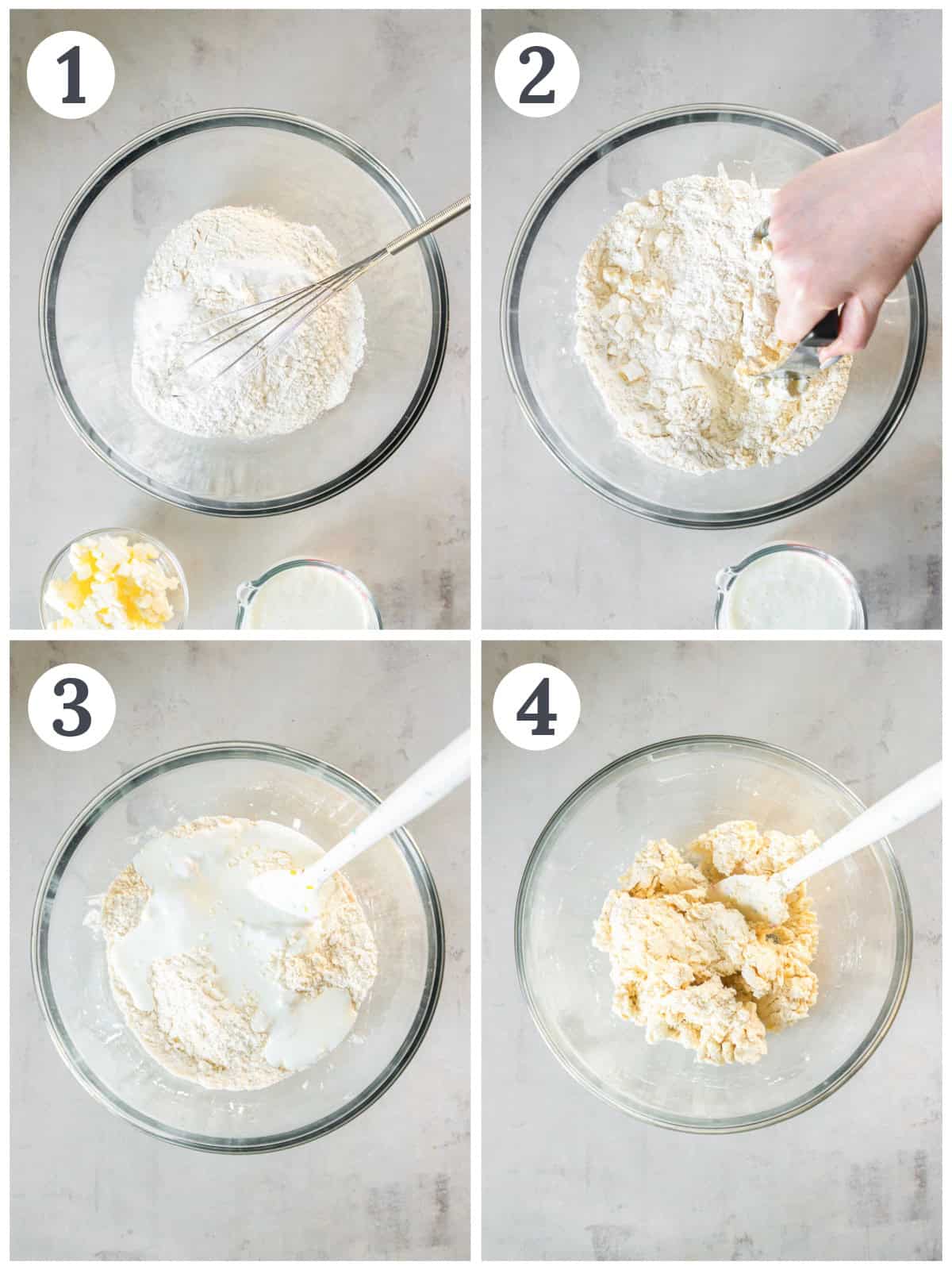
- In a large bowl, whisk together flour, baking powder, baking soda, sugar and salt.
- Add cold butter pieces to the bowl and, working quickly, use a pastry cutter to cut the butter into the flour mixture. Continue until the mixture resembles sand with a few larger butter clumps.
- Stir in the buttermilk using a spatula or wooden spoon.
- Mix just until combined and a slightly sticky ball forms. Do not over mix. Proceed with step #4 below.
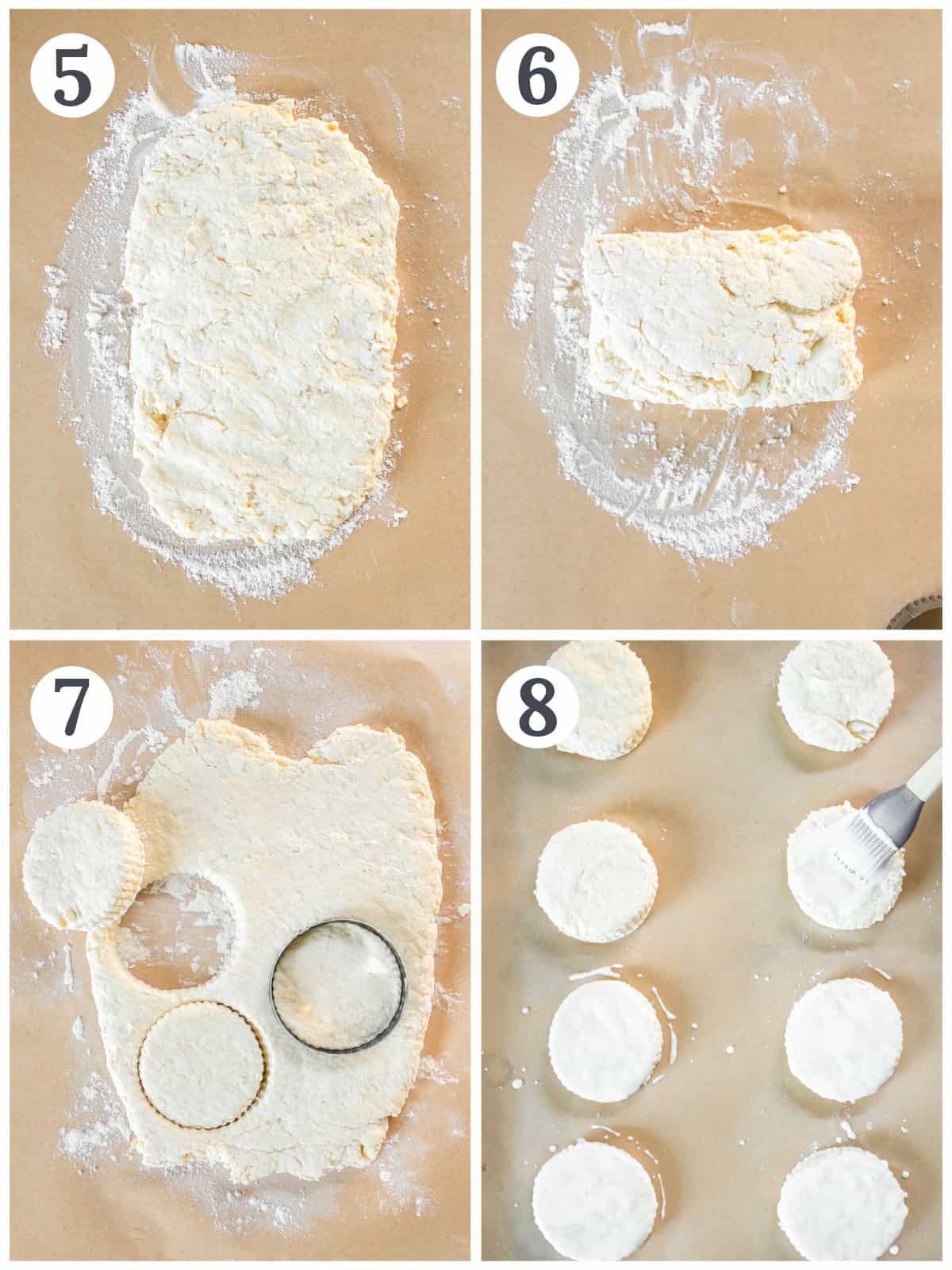
- Transfer dough to a lightly floured work surface and form into a rectangle 3/4-inch thick. Be careful not to over work the dough.
- Gently fold the dough into thirds (like you’re folding a letter). Roll the dough into a rectangle 3/4-inch thick again and repeat.
- Roll the dough 3/4-inch thick one final time and use a 3-inch biscuit cutter to cut out dough rounds and place on prepared baking sheet. Gather scraps and repeat once with remaining dough.
- Brush biscuits with buttermilk and bake at 450° F for 10 to 12 minutes or until the tops or light golden. Serve immediately.
Expert Tips
Make your own buttermilk. No buttermilk? Add 1 tablespoon of white vinegar or lemon juice to a measuring cup, then fill with milk to the 1-cup mark. Stir and let sit for 5 minutes. Use ¾ cup for this recipe.
Keep everything cold. Cold butter and buttermilk are the key to flaky biscuits. If the butter starts to soften, pop the dough in the fridge for a few minutes.
Don’t overwork the dough. Mix just until combined and use a light touch when folding. Too much mixing can make the biscuits tough.
Don’t twist the cutter. Press straight down when cutting your biscuits. Twisting can seal the edges and keep them from rising as tall.
Save some for later. Freeze unbaked biscuit rounds for up to a month. They’re great to have on hand when a biscuit craving hits!
Make Ahead and Storage Tips
Make ahead. Prepare and cut the biscuit dough, then arrange the rounds on a baking sheet. Cover tightly and refrigerate for up to 24 hours before baking.
Storing leftovers. Biscuits are best fresh from the oven, but you can store them in an airtight container at room temperature for 2–3 days.
Freezing unbaked biscuits. Freeze the cut dough rounds on a baking sheet until solid, then transfer to a freezer-safe bag for up to 1 month. Bake straight from frozen, adding a few extra minutes if needed.
Freezing baked biscuits. Let them cool completely, then store in a freezer-safe bag for up to 3 months. Thaw before reheating.
Reheating. Warm biscuits in a 350°F oven for 5–10 minutes, or until heated through. This helps bring back that crisp outside and soft, fluffy center. You can also reheat in the toaster.
Recipe FAQ
Your baking powder may be old, or the dough may have been rolled too thin. Make sure your baking powder is fresh and the dough is about ¾-inch thick before cutting.
Yes! Replace the all-purpose flour with self-rising flour and leave out the baking powder and salt. Keep in mind that the texture and rise may be slightly different.
Too much flour is usually the culprit. Spoon the flour into your measuring cup and level it off, or use a kitchen scale for the most accurate results.

Did you love this recipe? Please leave a 5-star 🌟🌟🌟🌟🌟 rating in the recipe card below and if you REALLY loved it, consider leaving a comment further down the page.

Get the Recipe: Buttermilk Biscuits from Scratch
Ingredients
- 2 cups (250 g) all purpose flour
- 2 teaspoons (8 g) baking powder
- ½ teaspoon (3 g) baking soda
- 1 teaspoon (5 g) sugar
- ½ teaspoon (3 g) salt
- ½ cup (113 g) (1 stick) cold unsalted butter,, cut into 1/4-inch pieces
- ¾ cup (180 ml) cold buttermilk
Instructions
- Preheat oven to 450 F. Line a baking sheet with parchment paper and set aside.
By Hand
- In a large bowl, whisk together flour, baking powder, baking soda, sugar and salt.
- Add cold butter pieces to the bowl and, working quickly, use a pastry cutter to cut the butter into the flour mixture. Continue until the mixture resembles sand with a few larger butter clumps.
- Stir in the buttermilk using a spatula or wooden spoon. Mix just until combined and a slightly sticky ball forms. Do not over mix. Proceed with step #4 below.
Using a Food Processor
- In the bowl of a food processor, add flour, baking powder, baking soda, sugar and salt. Pulse a few times in 1-second intervals until dry ingredients are combined.
- Add cold butter pieces to the food processor. Cover and process with about a dozen 1-second pulses until the mixture resembles sand with a few larger butter clumps.
- Pour buttermilk into the bowl of the food processor. Cover and process until large clumps of dough form, about eight 1-second pulses. Do not over mix. If the dough is too dry and not forming large clumps, add another tablespoon of buttermilk.
- Transfer dough to a lightly floured work surface and form into a rectangle 3/4-inch thick. Be careful not to over work the dough. Gently fold the dough into thirds (like you're folding a letter). Roll the dough into a rectangle 3/4-inch thick again and repeat. Roll the dough 3/4-inch thick one final time and use a 3-inch biscuit cutter to cut out dough rounds and place on prepared baking sheet. Gather scraps and repeat once with remaining dough.
- Brush biscuits with buttermilk and bake at 450° F for 10 to 12 minutes or until the tops or light golden. Serve immediately.
Notes
- Buttermilk substitute: In a liquid measuring cup, place one tablespoon white vinegar (or lemon juice). Pour milk into measuring cup up to the one cup mark. Stir gently and let stand for at least 5 minutes. Use 3/4 cup for this biscuit recipe.
- No pastry cutter? Try using two butter knives to cut the butter into the flour mixture.
- No food processor? Try using a box grater. Rub a stick of butter against the large holes over the bowl of dry ingredients.
- Chilling biscuit dough: After cutting the biscuits in to rounds, place them on the baking sheet and cover the sheet with plastic wrap or aluminum foil. Chill for 2 hours before baking.
- Freezing biscuit dough: Wrap dough rounds individually and store in a freezer bag in the freezer for up to one month.
- Storing baked biscuits: Biscuits are best when eaten immediately after they are baked, but they can be stored in an airtight container at room temperature for up to 2 or 3 days. Reheat in a toaster oven for best taste.
-
- Pastry cutter works well for cutting butter into dough.
- Food processor makes combining ingredients quick and easy
- Biscuit cutter forms the perfect biscuits rounds
- Kitchen scale weighs ingredients for accurate measurements
- Baking sheet is good for biscuits, scones and cookies!






10 Comments on “Buttermilk Biscuits from Scratch”
I tried these biscuits.My family just loved them!
Homemade biscuits are the best! I love having time to make things like this right now!
So light and flaky, the best kind of biscuit! I love how easy these are
I am drooling over these biscuits! Yum!
These Buttermilk biscuits would disappear in our house!
My family loves buttermilk biscuits! These would disappear in a flash! SO YUMMY!
This looks really amazing! I love how quickly you can make it!
That would be a huge hit with my family! Looks delish!
Can you substitute buttermilk with yogurt?
Hi Irina – I have not tried this substitution. Let us know if it works!