
Old Fashioned Chess Pie
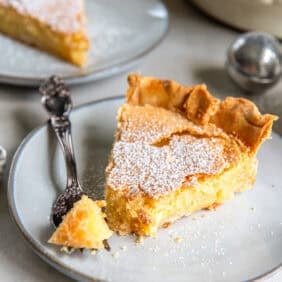
Don’t let the simple ingredients fool you! This chess pie is a Southern classic with a sweet, buttery custard filling, a golden, crackly top, and a flaky pie crust. It’s easy to make, wonderfully rich, and proof that sometimes the simplest desserts are the best!
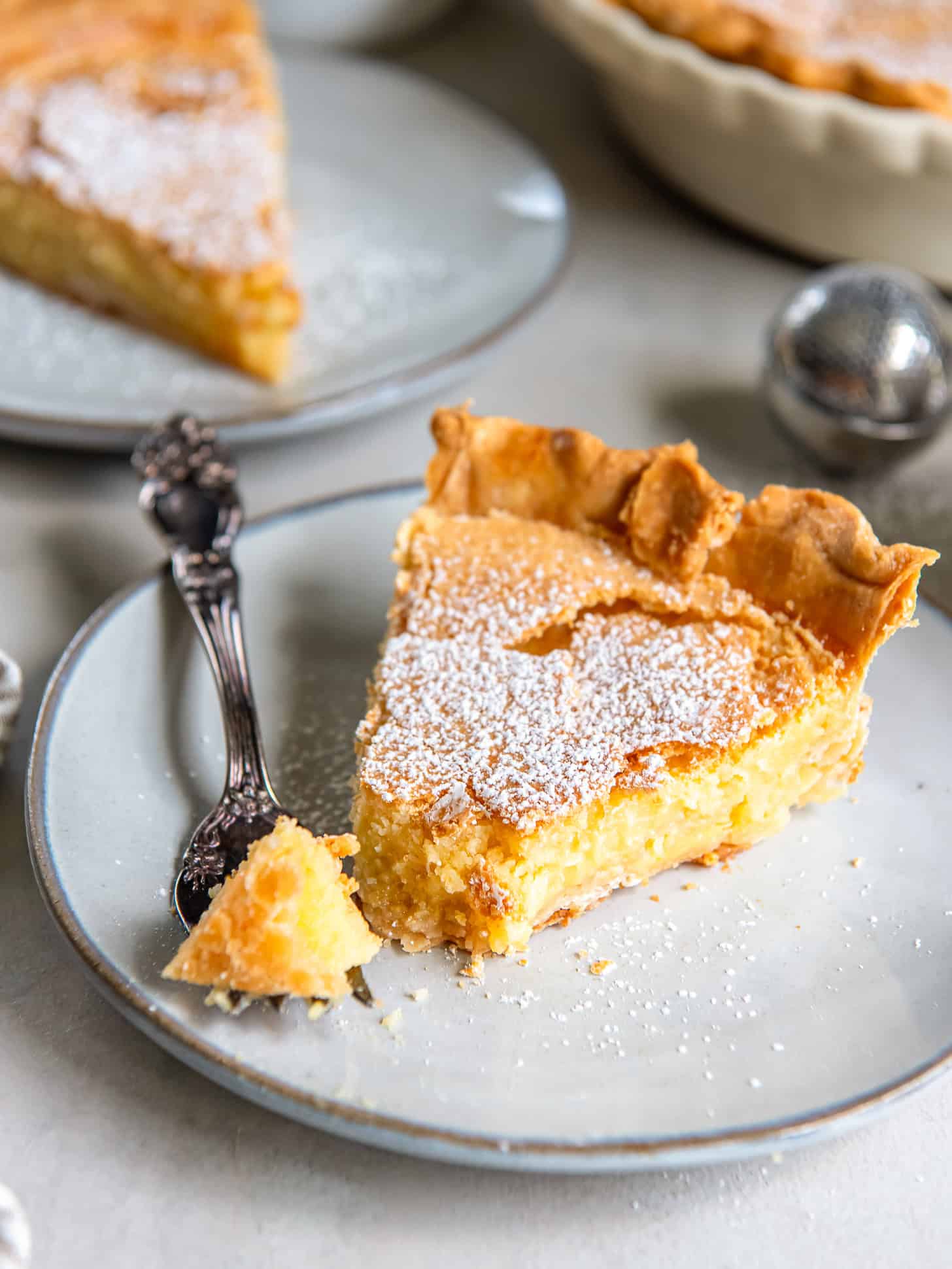
I’ve always had a soft spot for old-fashioned Southern desserts, and chess pie is one of those recipes that proves you don’t need anything fancy to make something delicious! With just a handful of pantry staples, you get a sweet, buttery filling that’s smooth and custardy with a slightly crisp, golden top. If you love these classic Southern desserts as much as I do, my chocolate walnut pie is another favorite worth trying!
Why You’ll Love This Recipe
- Simple ingredients, big payoff. Who knew a few pantry staples could turn into something so delicious? No fancy ingredients or extra trips to the store needed!
- Easy as pie. The filling takes just minutes to whisk together, and the oven does the rest. I love a dessert that doesn’t keep me in the kitchen all afternoon!
- A Southern favorite for a reason. That sweet, buttery custard filling and golden, crackly top are hard to beat. Every bite is packed with old-fashioned goodness!
- Perfect for any occasion. From Thanksgiving dinner to Sunday family gatherings, this pie fits right in. Serve it with fresh berries or a dollop of whipped cream to balance out the sweetness!
Ingredient Notes
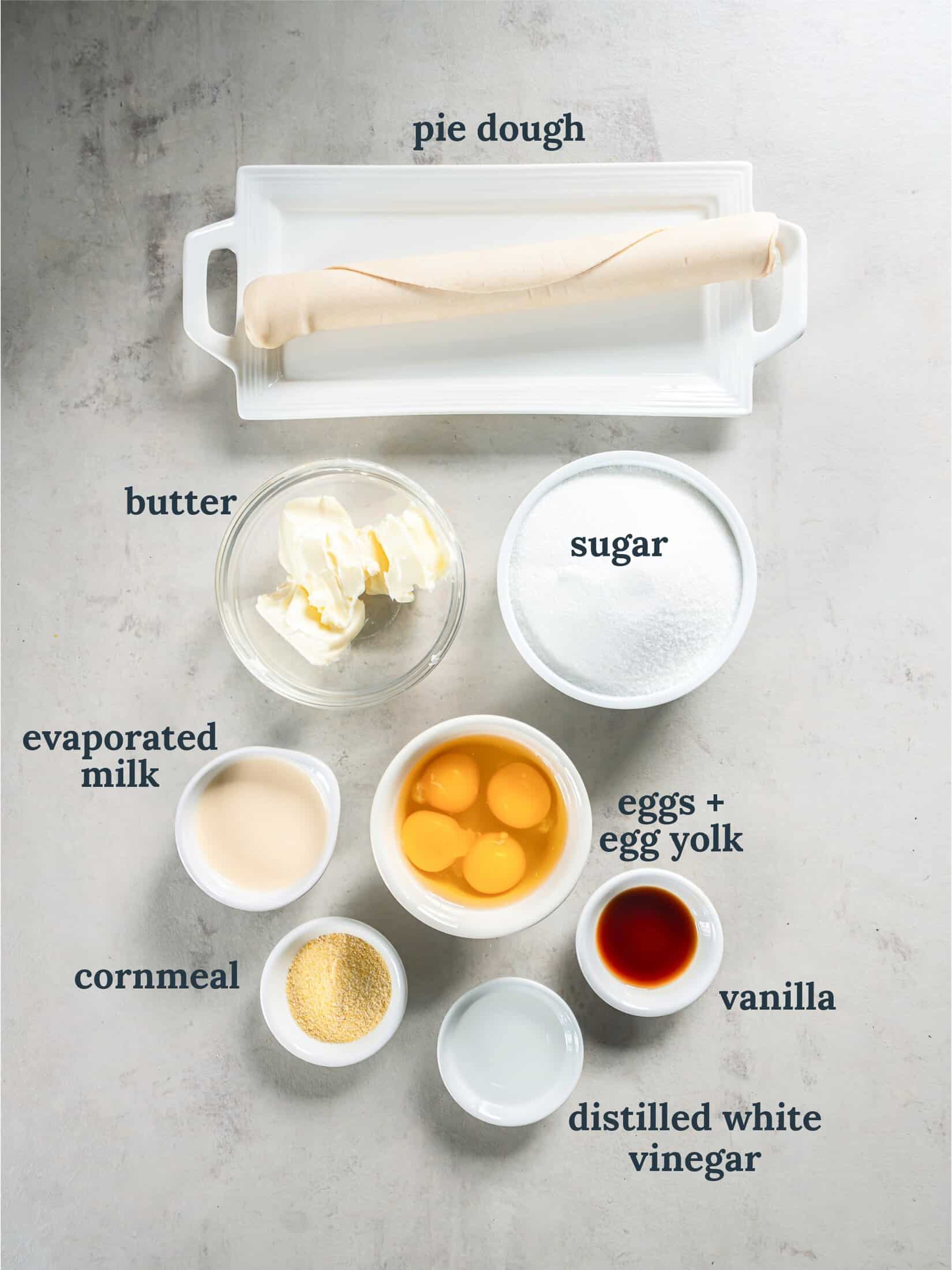
- Pie crust: A homemade, buttery pie crust is always delicious, but store-bought works great, too! You’ll need one crust for a 9-inch pie dish.
- Unsalted butter: Gives the filling its rich, buttery flavor. Melt the butter and let it cool slightly before mixing it with the other ingredients.
- Granulated sugar: Chess pie is known for its sweet, custardy filling, and sugar is a big part of what gives it that classic flavor and texture.
- Vanilla extract: Adds a warm, sweet flavor that pairs perfectly with the buttery filling. Pure vanilla extract is best!
- Eggs and egg yolk: Help the filling set into a smooth, creamy custard. The extra yolk adds richness. Room-temperature eggs work best for easy mixing.
- Evaporated milk: Adds creaminess and helps create that soft, custardy texture. Be sure to use evaporated milk, not sweetened condensed milk!
- Cornmeal: Just a tablespoon gives chess pie its signature texture and helps thicken the filling. Use finely ground cornmeal for the smoothest results.
- White vinegar: Don’t worry, you won’t taste it! A little vinegar helps balance the sweetness and adds that subtle tang classic chess pie is known for.
Refer to the recipe card for the full list of ingredients and measurements.
Recipe Variations
Lemon chess pie. Add 2 tablespoons of fresh lemon juice and 1 tablespoon of lemon zest for a bright, citrusy twist. Reduce the vinegar to 1 teaspoon to balance the tartness.
Coconut chess pie. Stir ½ cup of sweetened shredded coconut into the filling for a delicious tropical twist and a little extra texture.
Add a little crunch. Sprinkle ½ cup of chopped pecans over the filling before baking. They’re a great match for the sweet, buttery custard!
How to Make Chess Pie
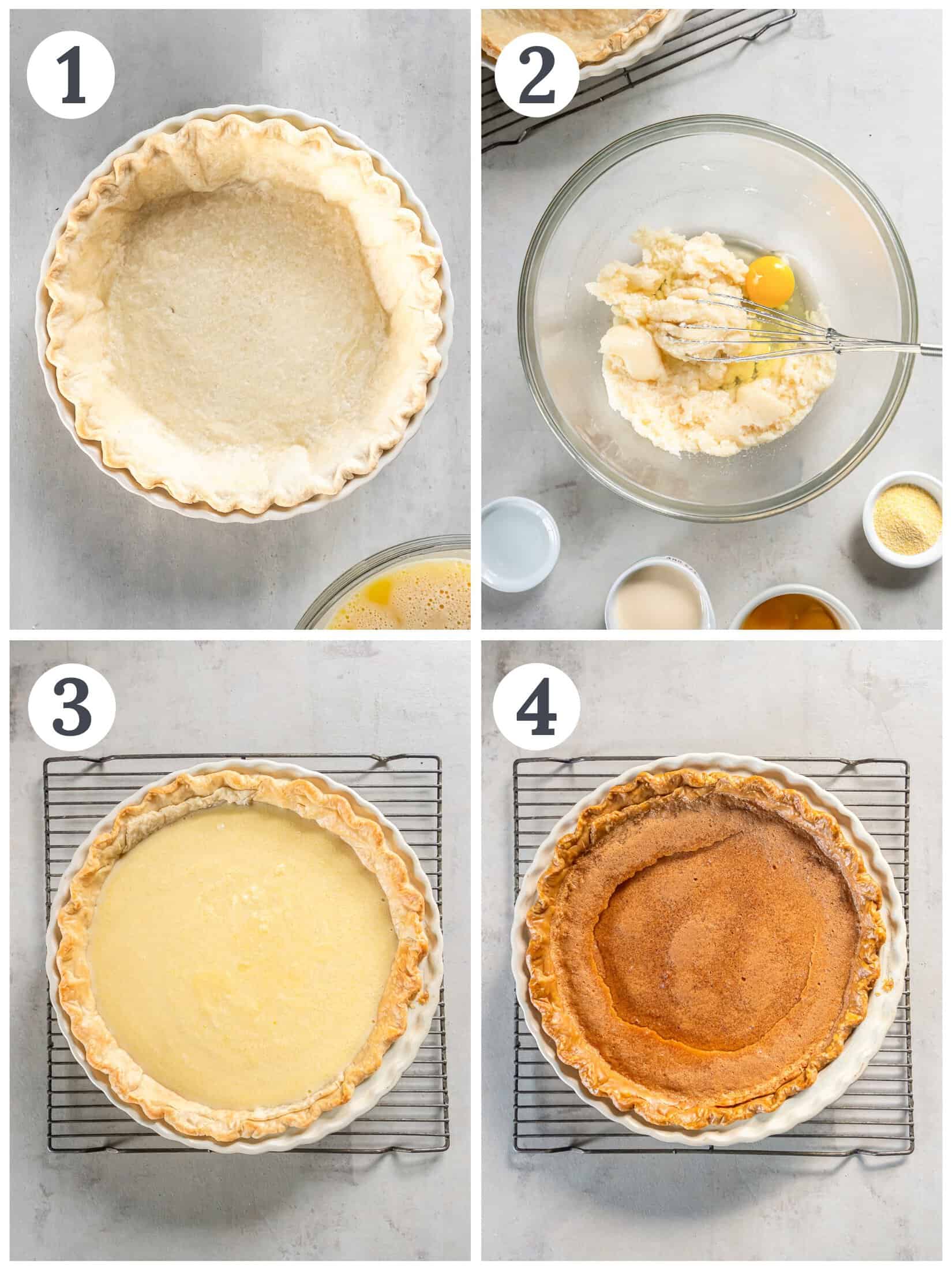
- Roll out pie crust into a 9-inch pie dish and crimp the edges. Freeze for 30 minutes, then line with parchment paper and pie weights. Bake at 400°F for 15 minutes, remove weights, and bake 5 more minutes until lightly golden. Cool completely.
- In a large bowl, whisk together the melted butter, sugar and vanilla until well combined. Mix in the eggs and egg yolk one at a time, whisking well after each addition. Mix in the evaporated milk, cornmeal and white vinegar. Scrape down the bottoms and sides of the bowl as needed.
- Transfer filling to parbaked pie crust. Bake at 350° F for 40 to 50 minutes or until the center is set and the top is golden brown. The top should look slightly burnt and may crack (that’s okay).
- Cool pie completely on a wire rack before cutting and serving.
Expert Tips
Don’t skip the blind bake. Parbaking the crust helps prevent a soggy bottom once the custard filling is added. Be sure to use pie weights to keep the crust from puffing up.
Use room-temperature ingredients. Let the eggs and evaporated milk come to room temperature before mixing. This helps everything blend smoothly for a creamy, even filling.
Cool the melted butter. Make sure the butter has cooled before adding the eggs. If it’s too hot, it could start cooking them and leave little bits of scrambled egg in your filling.
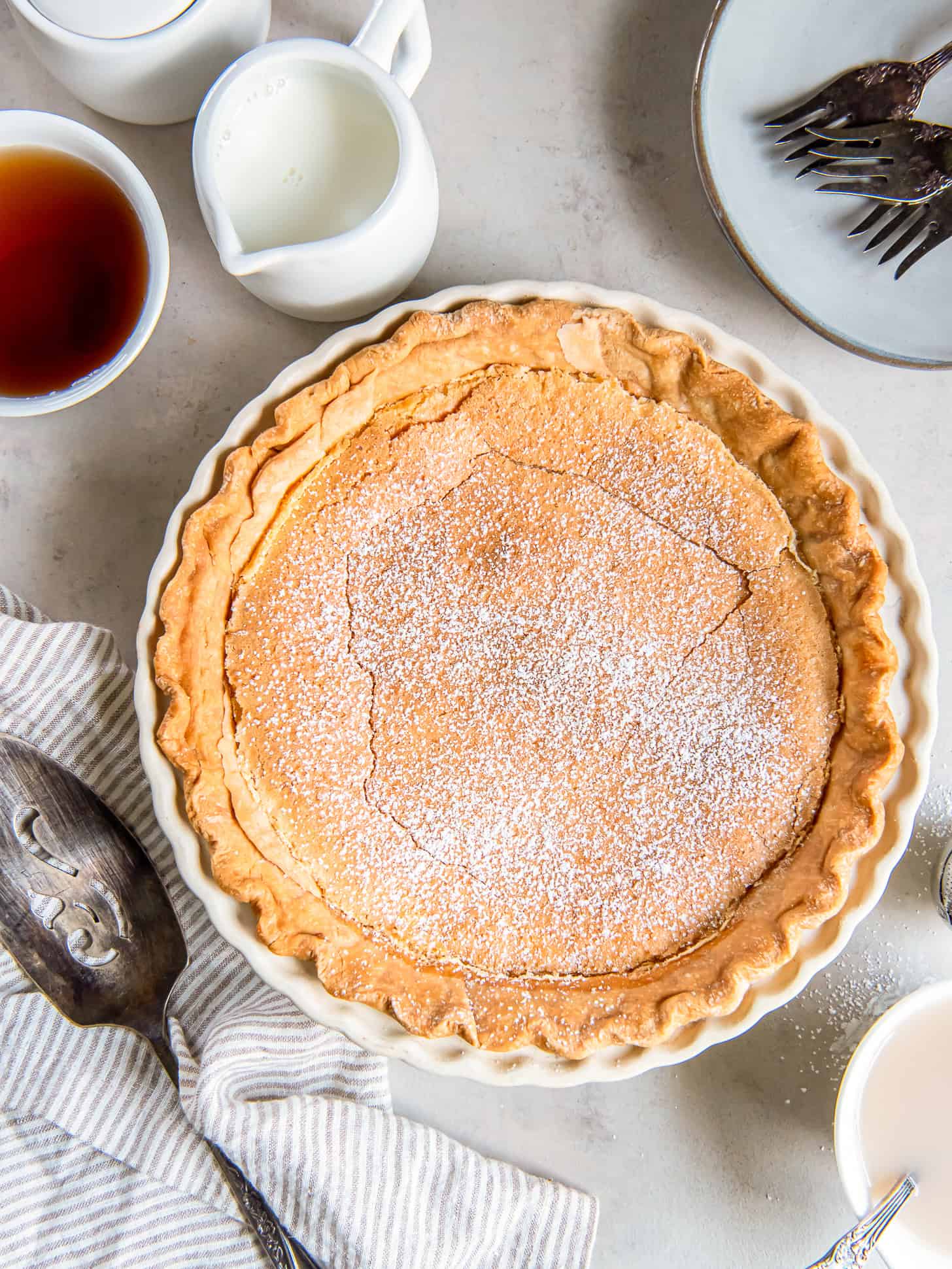
Don’t worry about cracks. A golden, slightly crackly top is part of the charm of chess pie! It’s completely normal and won’t affect the flavor.
Watch the baking time. The edges should be set, but the center can still have a slight jiggle when you gently shake the pie. It will continue to firm up as it cools.
Protect the crust. If the edges start browning too quickly, loosely cover them with aluminum foil or a pie crust shield.
Be patient before slicing. Let the pie cool completely so the custard has time to set. Cutting into it too soon can leave you with a runny filling instead of nice, clean slices.
Storage and Make Ahead Tips
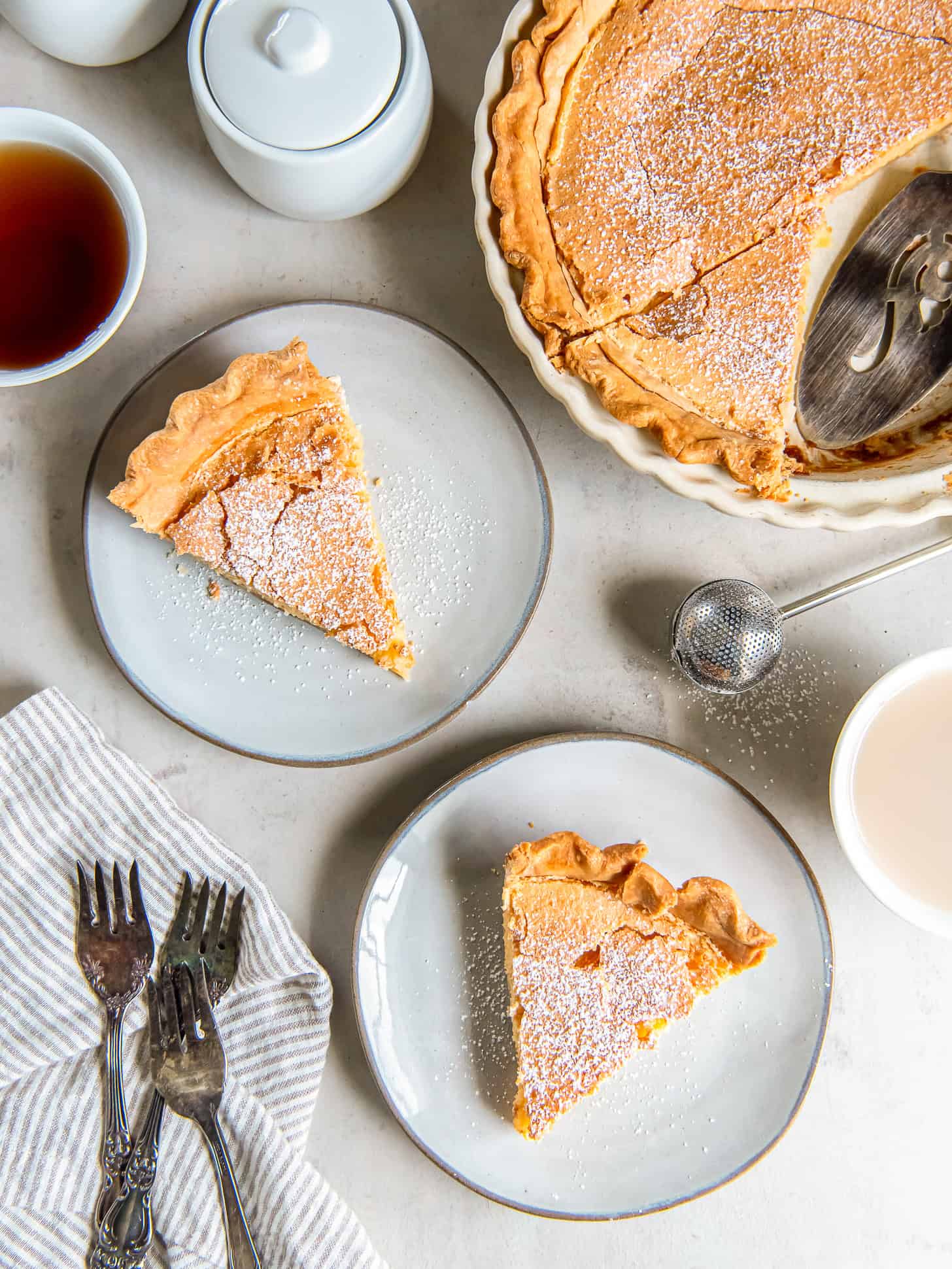
Storing leftovers. Once completely cooled, cover the pie tightly with plastic wrap or store slices in an airtight container in the refrigerator for up to 4 days. Enjoy it chilled or bring it to room temperature before serving.
Freezing. Chess pie freezes well! Let it cool completely, then wrap tightly in plastic wrap and aluminum foil. Freeze for up to 3 months. Thaw overnight in the refrigerator before serving.
Make ahead. This is a great dessert to prepare ahead of time! Bake the pie 1–2 days before serving and keep it covered in the refrigerator. The filling will have plenty of time to set, making it easier to slice.
Recipe FAQ
The exact origin of the name is a bit of a mystery! One popular theory is that it came from the term “cheese pie,” while another suggests it was named after the pie chests used to store desserts in the South.
Both are classic Southern custard pies, but chess pie typically contains cornmeal and has a sweeter, denser filling. Buttermilk pie uses buttermilk for a more noticeable tang and tends to have a lighter texture.
Yes! You can substitute an equal amount of fresh lemon juice for the white vinegar. It adds the acidity needed to balance the sweetness, along with a subtle citrus flavor.
Evaporated milk is preferred because it’s more concentrated and gives the filling a creamy texture. Whole milk may work, but the custard could be slightly softer and less rich.
More Thanksgiving Pie Recipes


Did you love this recipe? Please leave a 5-star 🌟🌟🌟🌟🌟 rating in the recipe card below and if you REALLY loved it, consider leaving a comment further down the page.
Get the Recipe: Old Fashioned Chess Pie
Ingredients
- 1 (1) pie dough
- ½ cup (113 g) unsalted butter, melted and cooled
- 1 ¾ cups (350 g) white sugar
- 1 teaspoon (5 ml) vanilla extract
- 3 (3) large eggs, room temperature
- 1 (1) egg yolk, room temperature
- ¼ cup (60 ml) evaporated milk
- 1 Tablespoon (15 g) cornmeal
- 1 Tablespoon (15 ml) distilled white vinegar
Instructions
Parbake Crust
- Roll out pie crust and place it in a 9-inch pie dish. Fold the edges in and crimp them. Place the dough-lined pie plate in the freezer for 30 minutes.
- Ten minutes before taking the pie plate out of the refrigerator, preheat your oven to 400° F.
- Remove pie plate from the freezer and line it with parchment paper. Place pie weights on top of it. Bake pie crust for 15 minutes or until edges of crust are starting to turn golden. Remove pie crust from the oven and carefully take out the pie weights. Then return the crust to the oven to bake for 5 minutes longer or until light golden. Set aside and cool completely.
- Reduce oven temperature to 350° F.
Filing
- In a large bowl, whisk together the melted butter, sugar and vanilla until well combined. Mix in the eggs and egg yolk one at a time, whisking well after each addition. Mix in the evaporated milk, cornmeal and white vinegar. Scrape down the bottoms and sides of the bowl as needed.
- Transfer filling to parbaked pie crust. Bake at 350° F for 40 to 50 minutes or until the center is set and the top is golden brown. The top should look slightly burnt and may crack (that’s okay). If the crust is browning too quickly, cover with aluminum foil.
- Cool pie completely on a wire rack before cutting and serving.