
Glass vs. Metal Baking Pans
Whether to use glass vs. metal baking pans may seem like a minor detail, but swap one for the other in the wrong recipe and you’ll end up with sunken centers, burnt edges, or a brownie that never quite sets. The type of pan you use can actually make a big difference in how your recipe turns out. Let’s break it down so you know exactly when to use each one.
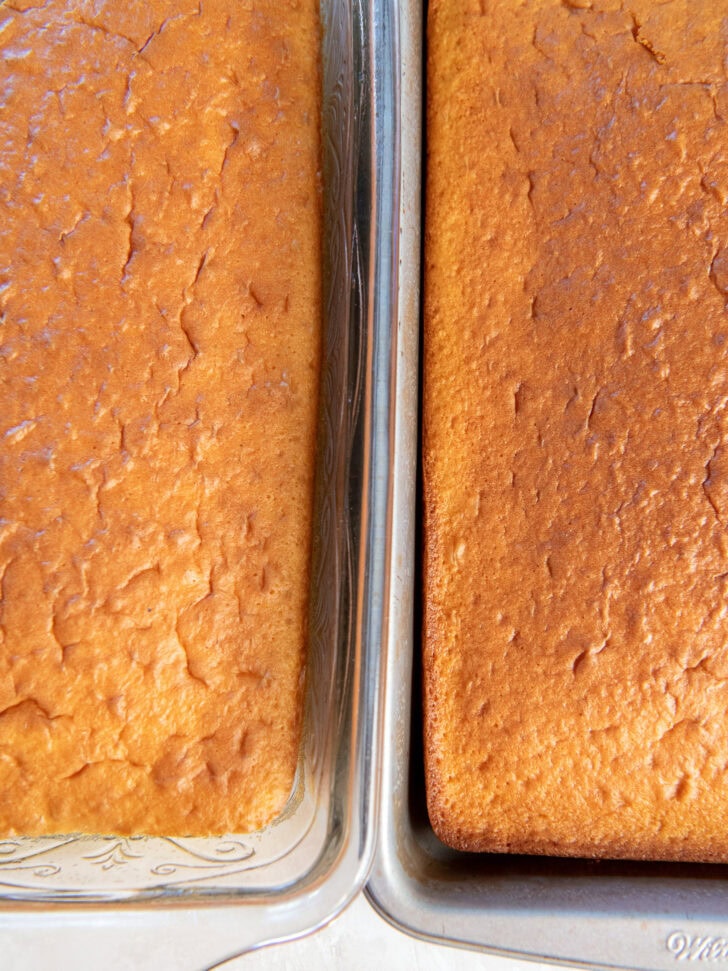
Glass vs. metal baking pans is one of the most underrated variables in baking, and the difference between glass and metal is more dramatic than most people realize. This isn’t a matter of personal preference, there’s real science behind which pan to use and when.
Let’s say you’re making my classic brownies, and you’ve followed the recipe exactly. Same ingredients, same technique, yet something is still off. The center sinks. The edges dry out. The brownie comes out gummy. Sound familiar? Before you question your oven temperature or your mixing method, ask yourself one thing: what kind of pan did you use?
Glass vs. Metal Baking Pans
The main thing to understand is that glass and metal heat very differently. Metal pans (especially aluminum) heat up quickly and evenly. That means your batter starts baking right away, helping everything cook through at the same pace.
Glass and ceramic pans, on the other hand, heat more slowly and hold onto heat longer. They act more like an insulator, so it takes longer for heat to reach the center, but once it does, it sticks around. By the time enough heat has radiated through the glass to cook the center of your banana bread or brownie, the edges are already overcooked or drying out.
That one difference can completely change your results.
Brownie Bake Test: Glass vs. Metal Pans
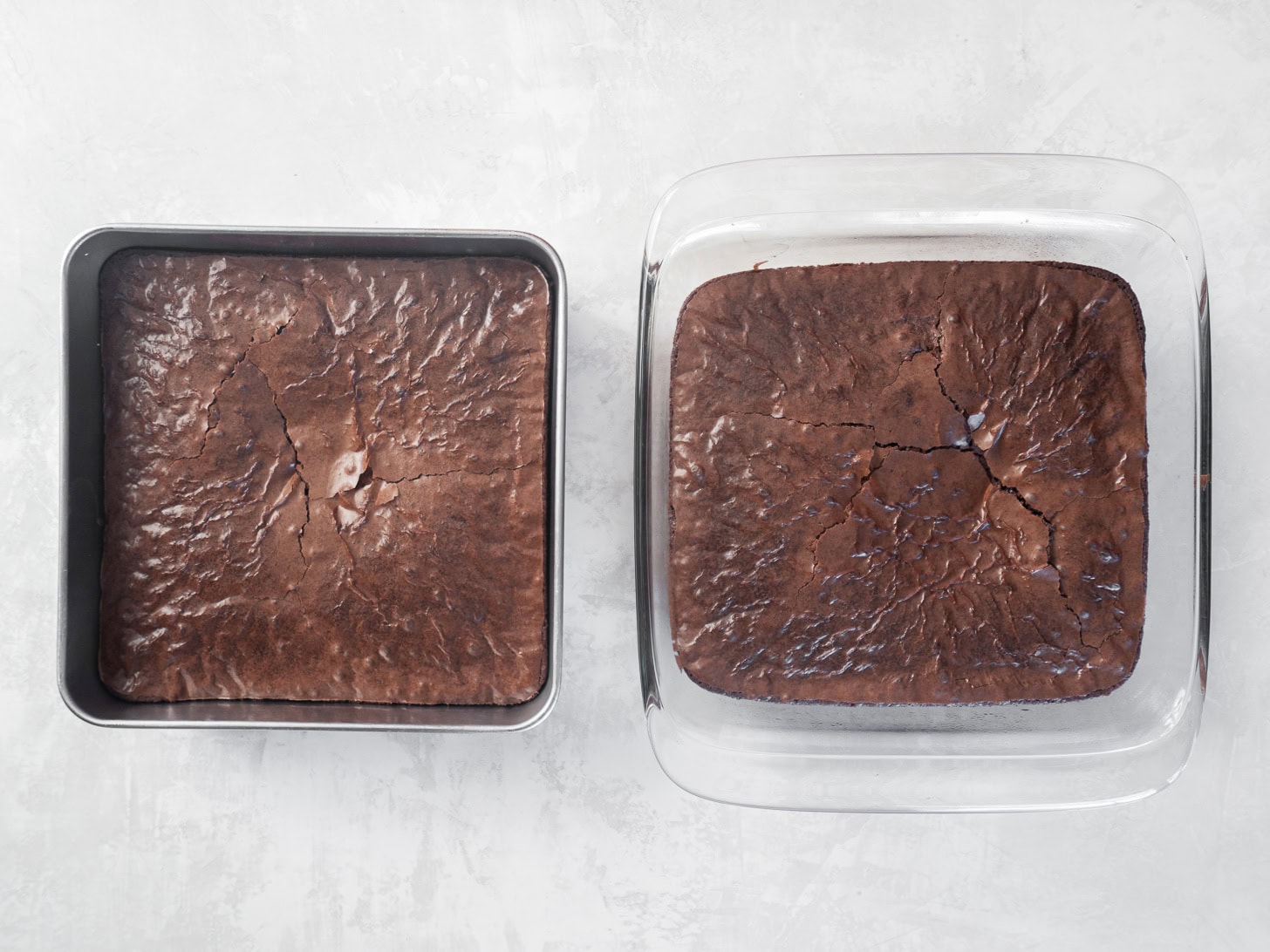
I put it to the test by baking the same fudgy brownie recipe twice, once in a light metal pan and once in a glass pan, using the same oven temp and timing to compare the results.
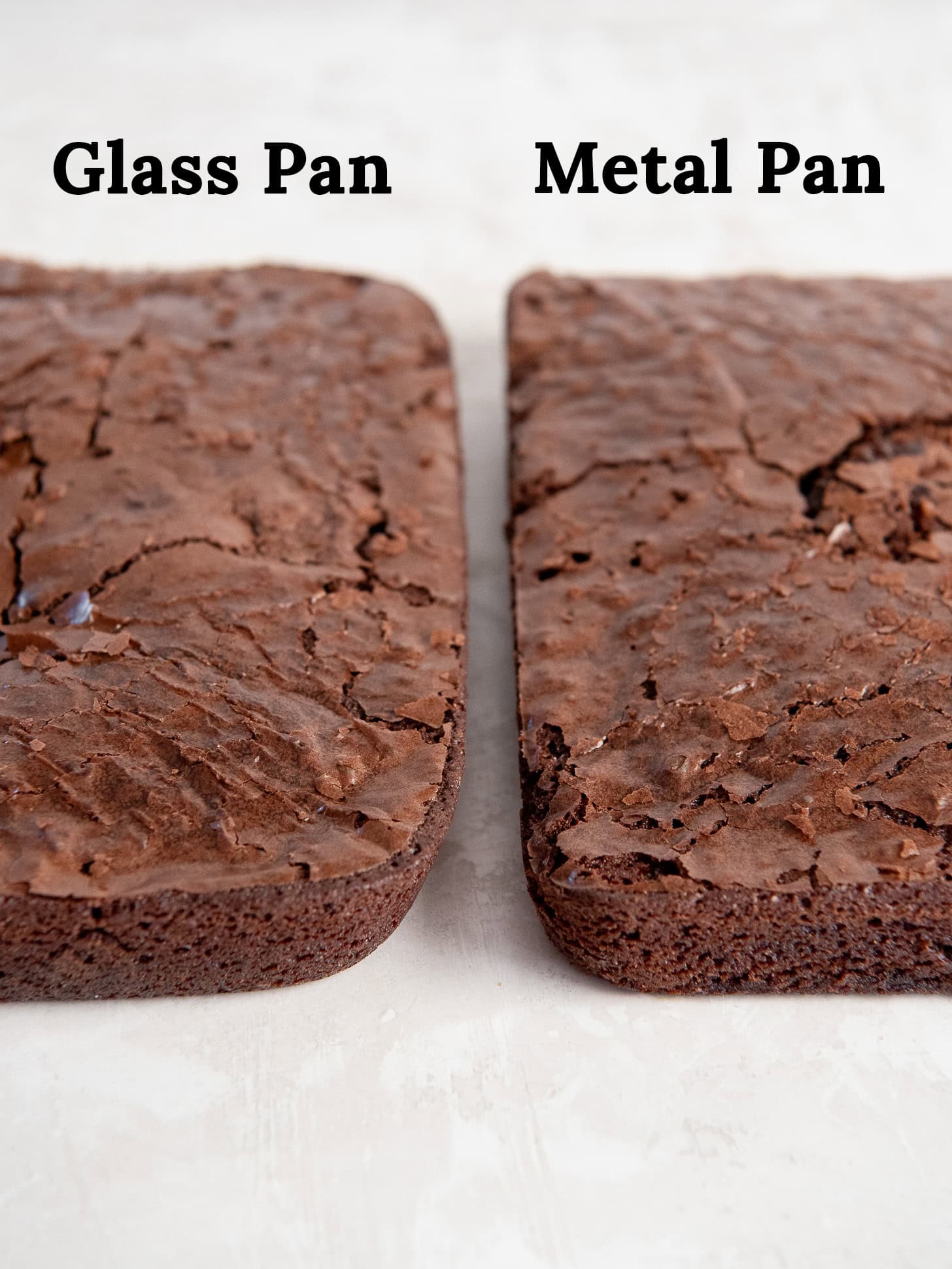
The brownies baked in the metal pan were fully set after about 30 minutes. They turned out taller, thicker, and had that ideal chewy, slightly fudgy texture.
In contrast, the brownies baked in the glass pan were still quite underbaked in the center at the 30-minute mark. The edges also came out more rounded instead of clean, sharp squares like the metal pan batch. Overall, they were shorter, much gooier in the middle, and even sank a bit as they cooled.
Cake Bake Test: Glass vs. Metal Pans
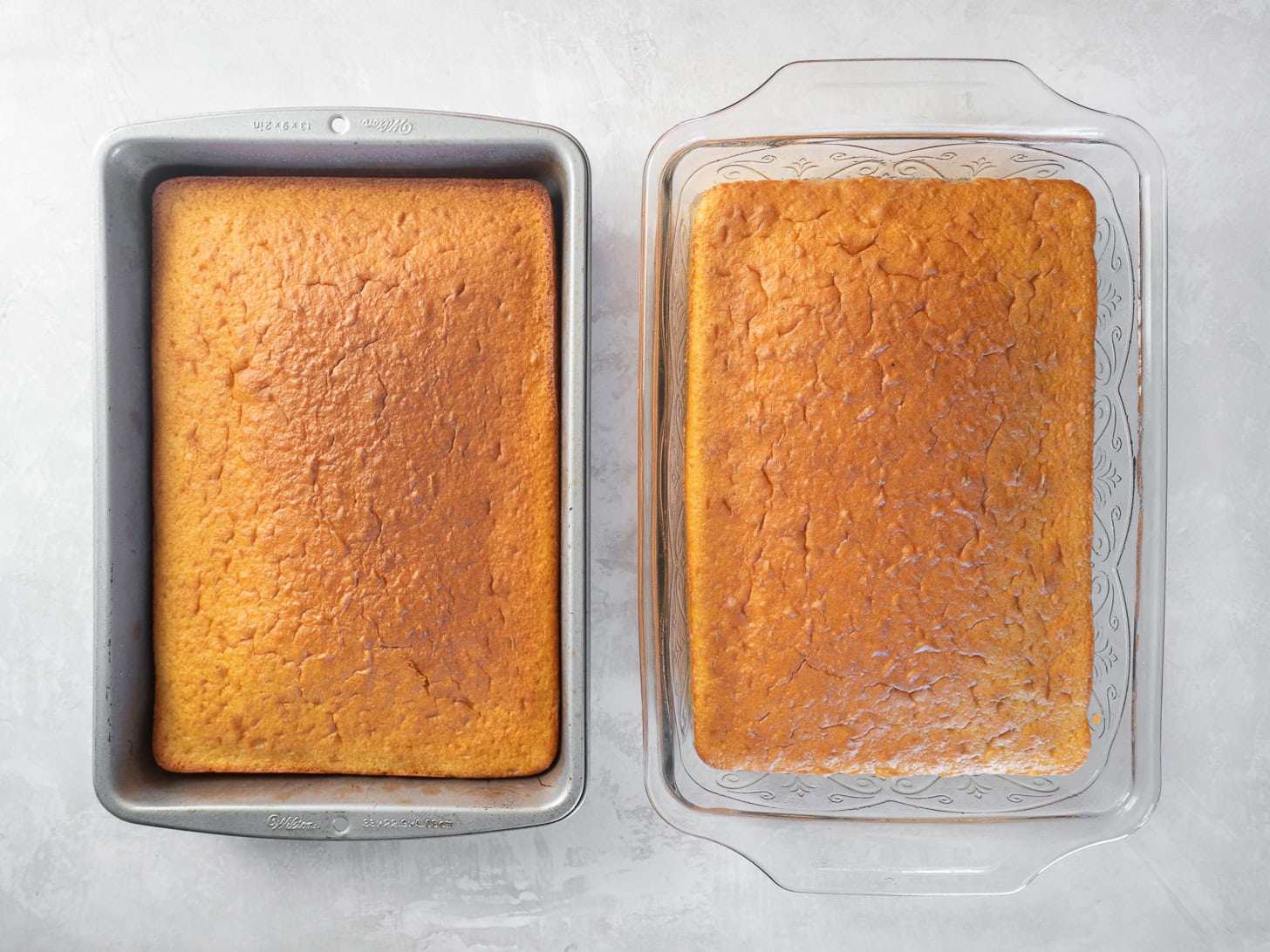
I also tested the same cake recipe twice, once in a light metal pan and once in a glass pan, using the same oven temperature and bake time to compare the results.
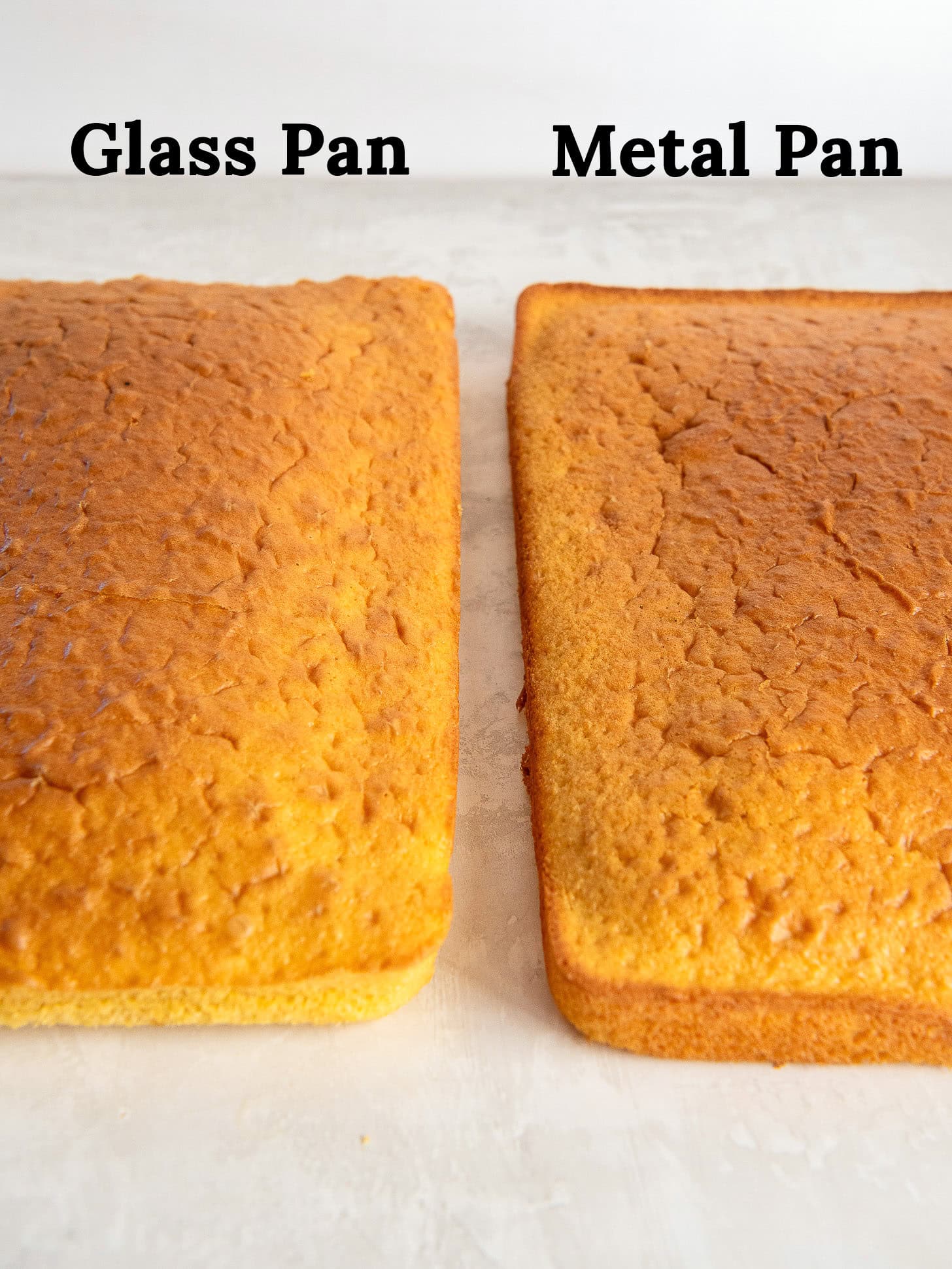
The cake baked in the metal pan came out evenly baked after the full bake time. It had a light, fluffy texture, rose nicely, and sliced into clean, even layers.
The cake baked in the glass pan took longer to set in the center. The edges baked faster, which made them slightly darker while the middle was still a bit underdone. It also didn’t rise quite as evenly and had a denser texture compared to the metal pan cake.
When to Use a Metal Pan
If you want consistent, reliable baking, metal is usually your best bet.
Great for:
- Brownies and bars
- Cakes and cupcakes
- Quick breads (like banana bread)
- Cookies and sheet pan bakes
Because metal heats quickly, it helps baked goods rise properly and cook evenly from edge to center.
You’ll also get:
- Better structure
- Cleaner edges
- More even browning
That’s why most recipes are tested using metal pans.
When Glass Is a Better Choice
Glass definitely has its place, you just want to use it strategically.
Best for:
- Casseroles
- Lasagna
- Fruit desserts (like cobblers or crisps)
- Anything acidic (tomatoes, citrus, berries)
Glass is non-reactive, so it won’t affect the flavor of acidic ingredients.
Another bonus? It holds heat really well, which keeps dishes warm longer, perfect for serving something like breakfast casserole straight from the oven.
Expert Tips
Watch dark metal pans closely. Dark-coated pans absorb more heat, which can lead to overbrowned edges or burnt bottoms, especially in cookies, cakes, and sugary bakes. If using one, start checking for doneness a bit earlier than the recipe suggests.
Use light-colored pans when possible. They provide more even, consistent baking without excessive browning.
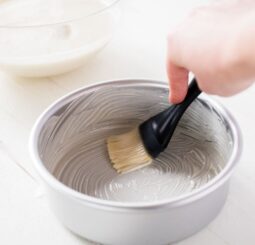
Pan prep. Always grease metal pans generously. They release heat faster, which means batter can stick more quickly at the edges. Line metal pans with parchment for cleaner cuts on brownies and bars
Recipe FAQs
A light-colored aluminum metal pan is the most reliable for consistent baking results.
Don’t panic, you can still get good results with glass, you just need to compensate for its slower heat absorption. As a general rule, you’ll want to lower the oven temperature by about 25°F and expect to increase bake time by 5–15 minutes, depending on the recipe and amount of batter.
Yes! If you’re swapping in a metal pan for a recipe that was written for glass, just keep in mind it may bake a little faster. Start checking for doneness about 5–10 minutes earlier than the recipe suggests.
More Baking Tips
For more helpful baking tips and tricks, check out my Better Your Baking series.